Woofer Box PLACEMENT
by Eddie Runner (NU5K)|
Which way to aim a trunk mounted woofer box in a car has been quite a topic of speculation for years.
One dumb explanation is the sound travels further when the box aims to the rear and by traveling further it sounds
better.
Another explanation is "the wave has more room to develop."
And there used to be a story floating around called "bass trap" which inferred a magical property of some cars to eat up all the bass and not let it get to your ears. But there really is a problem of building a wonderful well thought out and superbly engineered woofer box which makes bass
so perfect my eyes water with only a few watts of input on my test bench, but then seems to barely have any output when installed
into the car.
Most installers simply turn the box backward and there is more bass output, I did that too, but I wanted to know why! A big clue came when I noticed there was much more bass in the car with the trunk open than with the trunk closed!
|
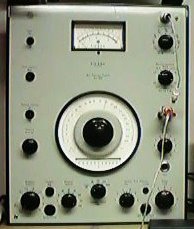
B&K Sweep Oscillator, this thing will make any tone you can hear and can sweep through them automatically. |
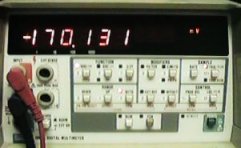
Fluke Benchmeter, very accurate for watching and comparing levels |
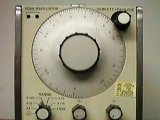
HP Audio sine oscillator , can make any tone without the automatic sweep of the previous unit. |
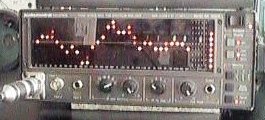
Audio Control RTA, it's like you can WATCH the sounds. |
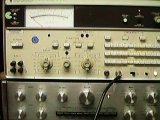 Sound Technology Audio Oscillator, Distortion analyzer, volt meter |
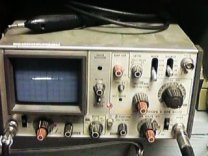 Oscilloscope |
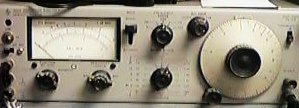
HP Audio distortion analyzer and super sensitive volt meter. |
|
For actual in car tests check here! (aiming woofer boxes part 2) After a few days of playing with all the fun toys I discovered the bass that goes away when opening the trunk was causing cancellation when kept in the car (trunk closed), and turning the box backward made less of a difference when opening the trunk, and moving the box all the way to the back of the trunk eliminated having an increase in SPL when opening the trunk totally.
In summary I found:
I used sine waves (not music) and mapped out the phase relationships between the incident (direct) sound wave entering the car and the reflected wave that hits the back of the trunk and reflects forward. Since the reflection is bounced into the listening area, you can treat them much the same as having two sources... I drew some pictures to illustrate what I found.
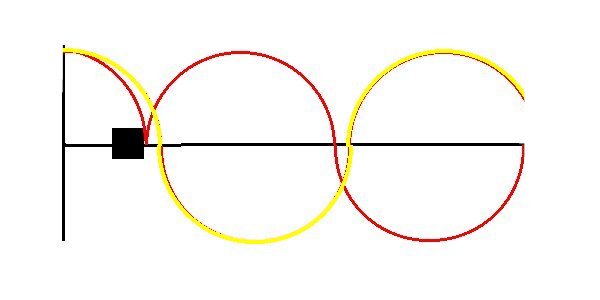
In the picture above, try to imagine the back of the trunk is the vertical black line at the left of the picture and the little square is the speaker box. This
picture is an illustration of what happens when sound comes out of the right side (front side) of the little square speaker box. Sound actually goes forward
into the car (incident wave (RED)) and also backwards to reflect off of the back of the trunk (reflected wave (YELLOW))...
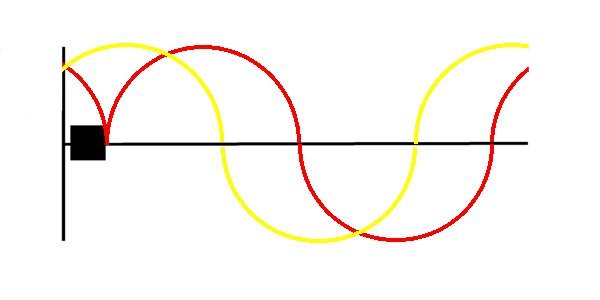
In the picture above, the speaker box has been aimed at the trunk instead of in the car and it is plain to see the incident and reflected wave are not nearly so
much out of phase as in picture 1!
This picture above represents the speaker box being moved to the rear of the trunk
with the speakers aiming forward. The waves are a little closer to being in
phase with each other. (were gettin there!)
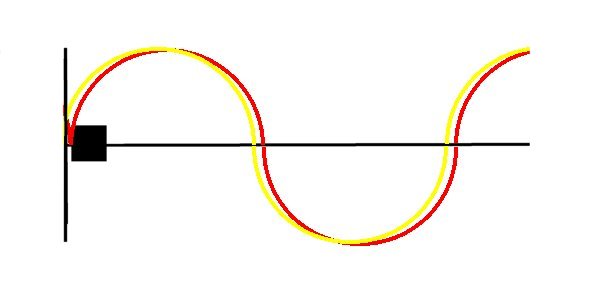
Finally, in this picture we are aiming the rear mounted speaker box to the rear so the incident and reflected wave are very close to being in perfect phase, reinforcing each other quite well. These pictures are simulating a 60Hz bass note with the rear of the box mounted approximately 3 feet from the
back of the trunk (reflector) ...
For actual in car tests check here! (aiming woofer boxes part 2) |